 EN
EN
 ES
ES

Counterfeits of the 1856-1861 Issue: A New Discovery
This article was originally published in MEPSI's journal, Mexicana, in October 2023.
Joe Stuart wrote the definitive article “The Counterfeits of Mexico’s 1856, 1861 and 1867 Issue” in the January 2001 issue of Mexicana. He listed, described and pictured sixteen different types which we label Stuart Types I-XVI. The term “counterfeits” is synonymous in this case with facsimiles as opposed to the ubiquitous “Reprints” of Mexico’s first issues. The counterfeits for the most part were not produced to cheat collectors, they were instead made to provide space fillers to collectors in the early days of stamp collecting. Of the 16 types described by Stuart only two closely resemble genuine stamps, most are very crude and would not fool any seasoned collector of Mexico. In spite of this if one views eBay or Hipstamp you will see listings of these stamps sold as genuine nearly every day.
Stuart’s descriptions of the counterfeit types are very thorough so no need to reiterate what has already been published. Since the original photos were black and white, I would like to show some of the common counterfeit types which might be helpful to some. I will picture the common ones that are often seen in the marketplace. In addition, I am showing a new discovery, a counterfeit type not described by Stuart and not documented previously. I will call it Type XVII.
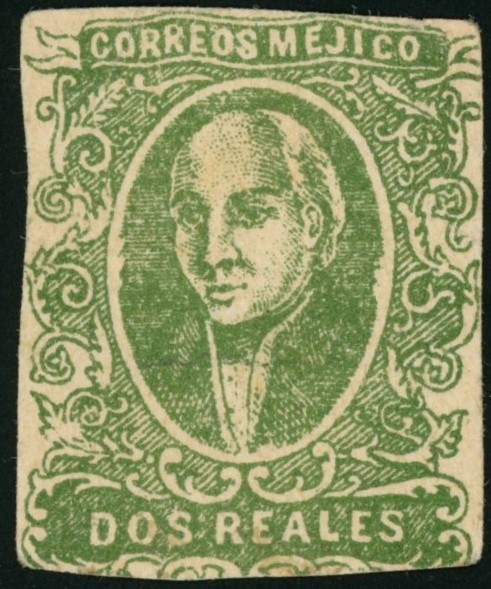
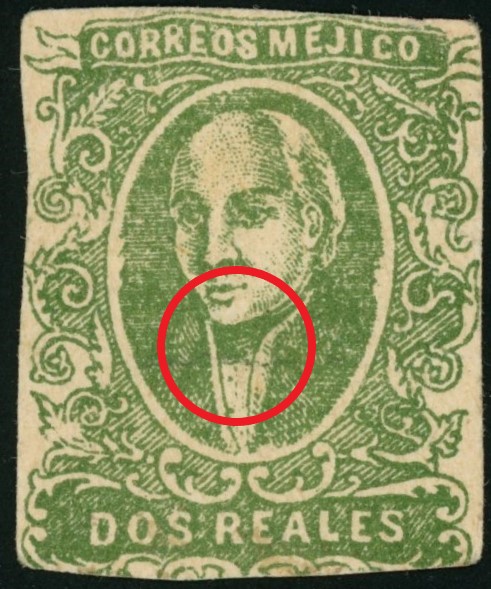
This counterfeit type is very similar to Types V, VIII and IX. The only copy I have found is a green dos reales stamp. It is lithographed on a hard, white wove paper and has no cancels or overprints.
Similar Types to the new Type XVII
The easiest way to distinguish the new Type XVII is to look at the cravat tie. It is much longer than on any of the other counterfeit types. Note in the red circled area that the dark area of the tie extends down from the chin more so than on any other type.
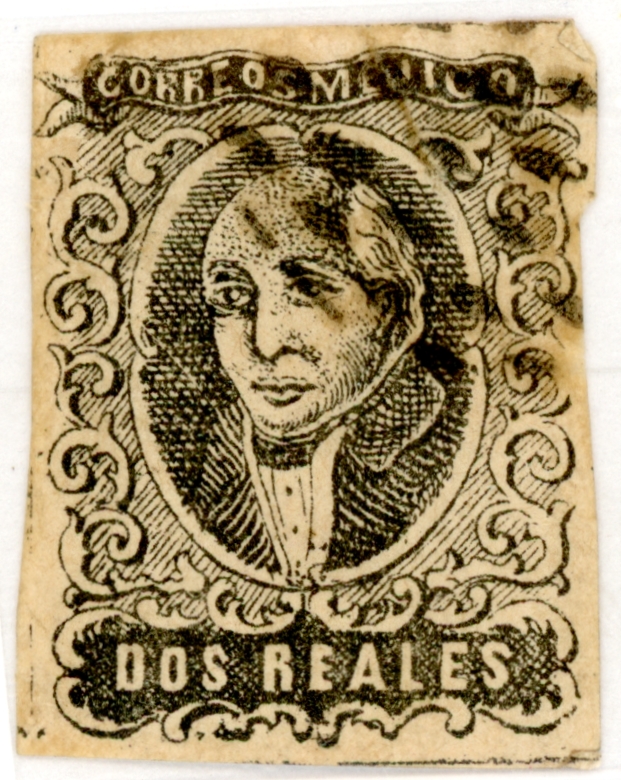
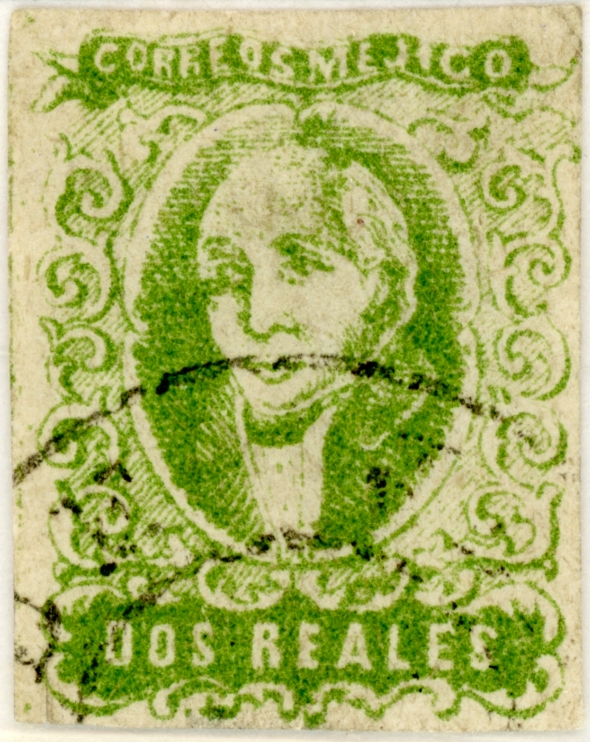
Below are additional common types that are often seen on Internet sales venues. In most cases the colors and design are very different from genuine stamps.
Stuart Type I
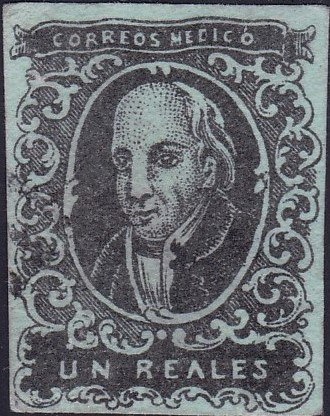
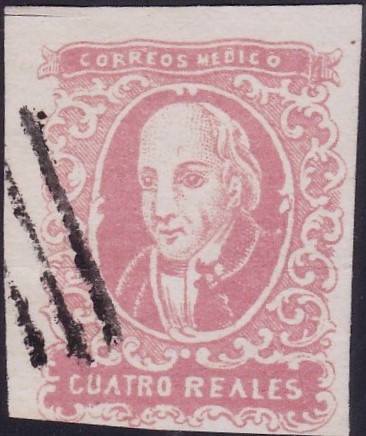
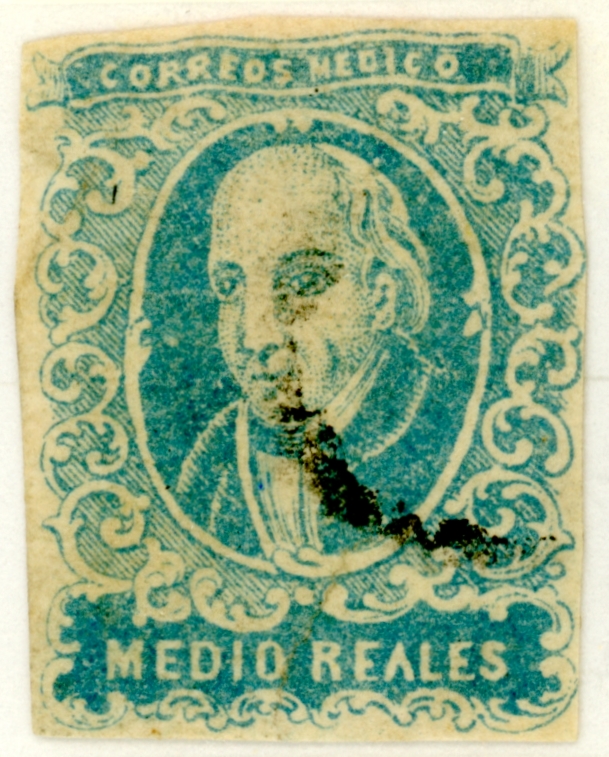
Type I was first described in 1965, is very crude and should not fool any collector of Mexico.
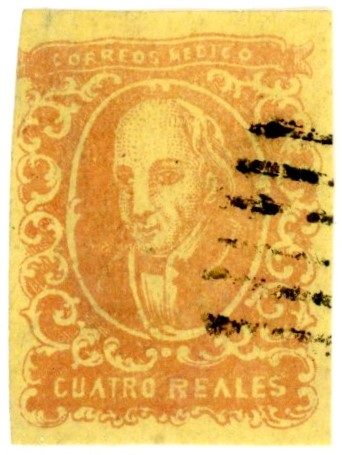
Stuart Type IV
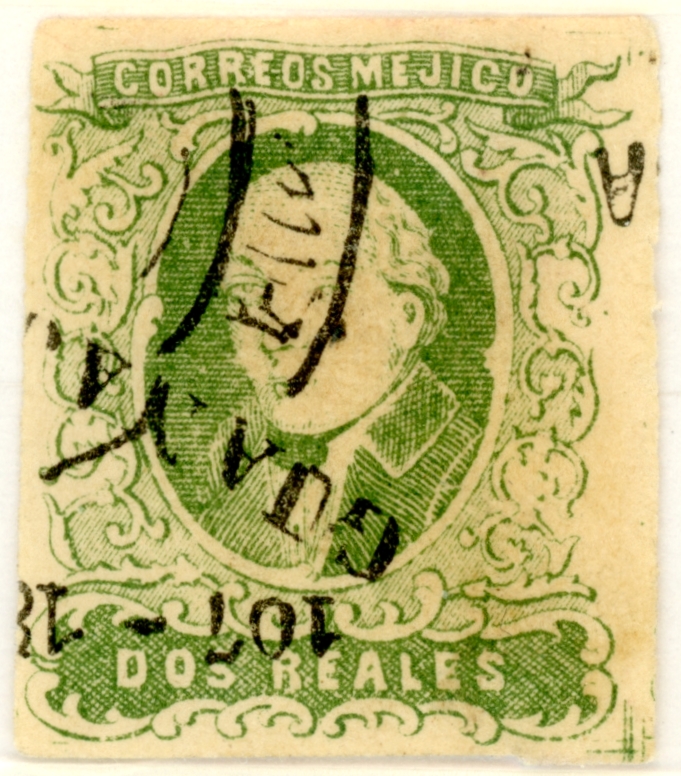
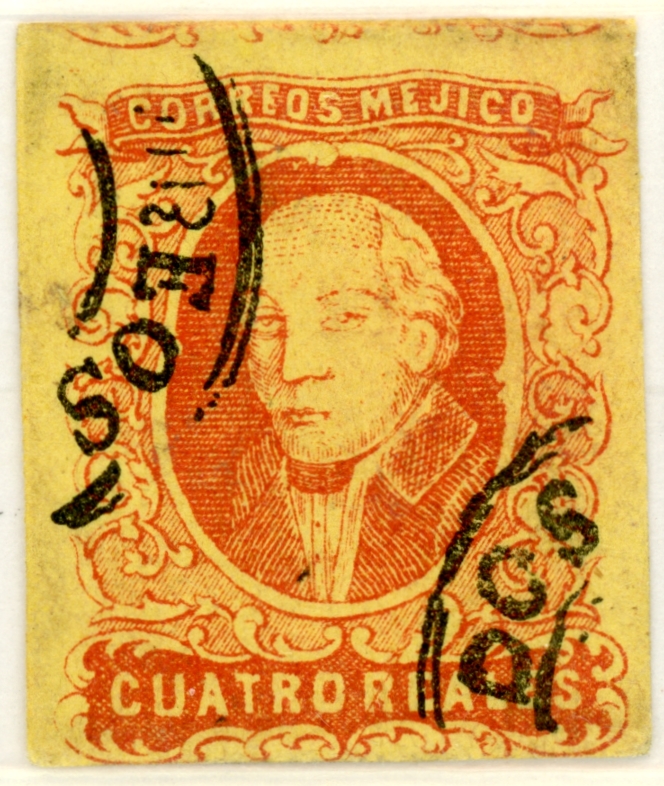
Type IV only comes in three values and all have cancellations which appear to be part of the printing.
Stuart Type X
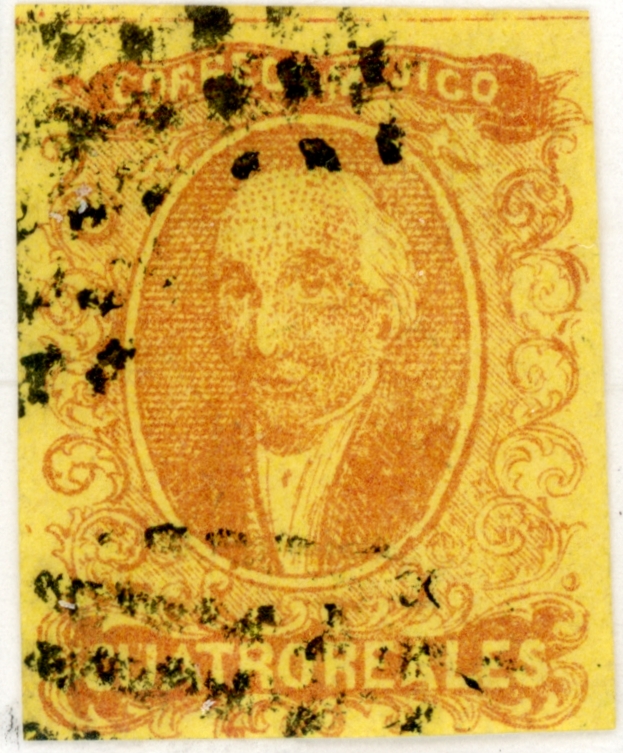
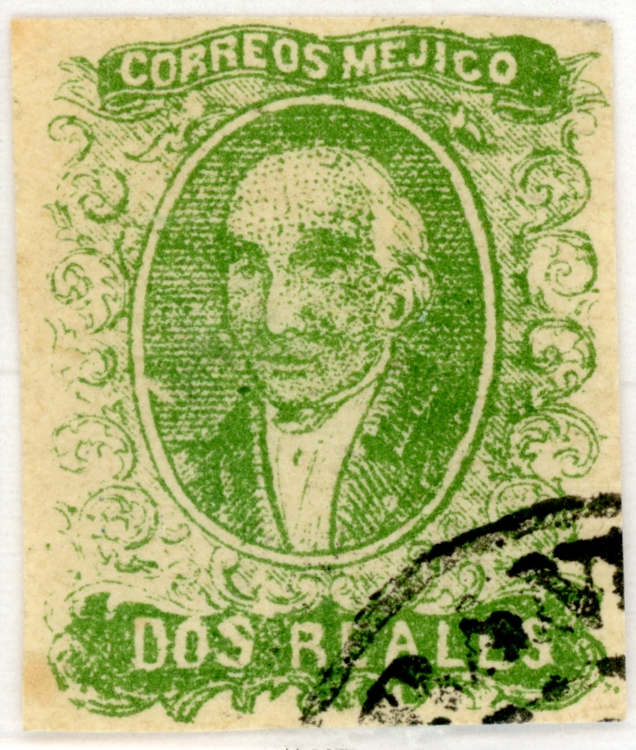
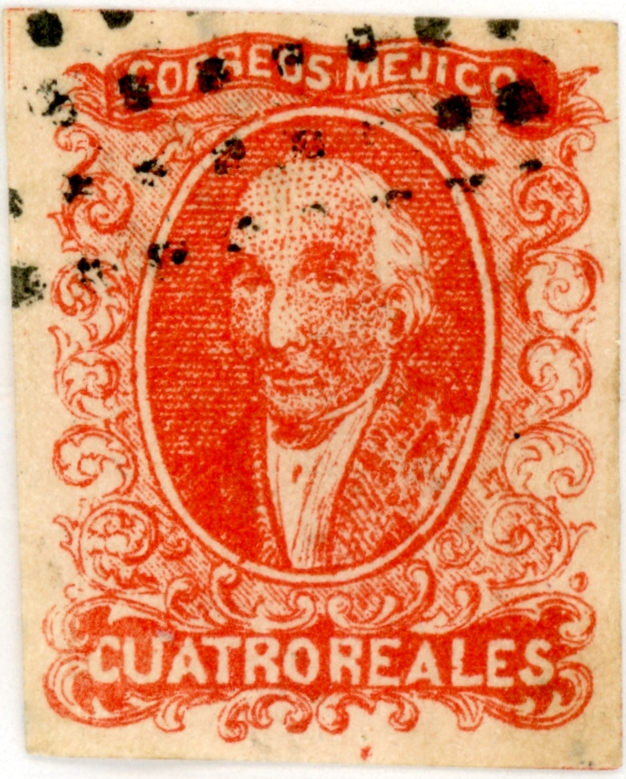
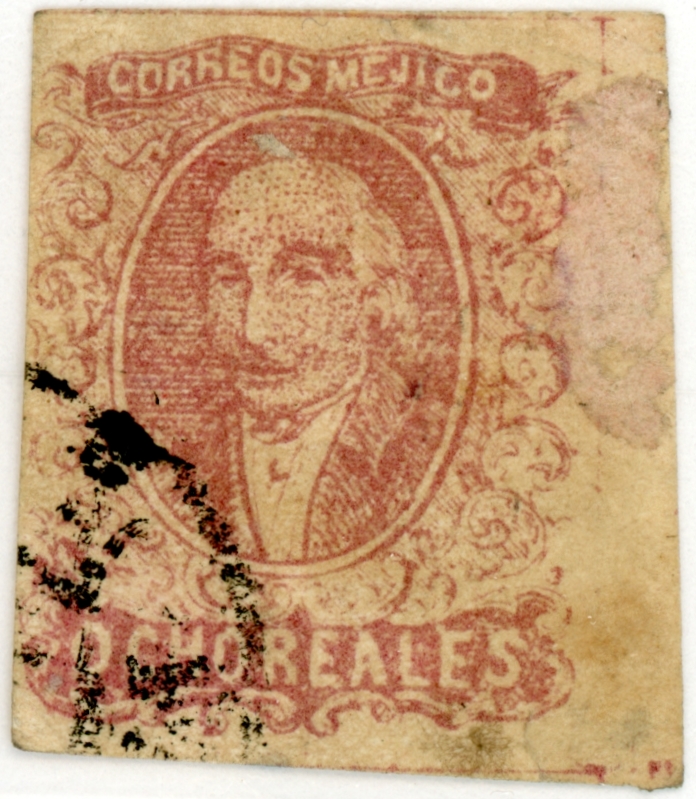
Type X has the appearance of an old man, nothing like the genuine stamps.
Stuart Type V
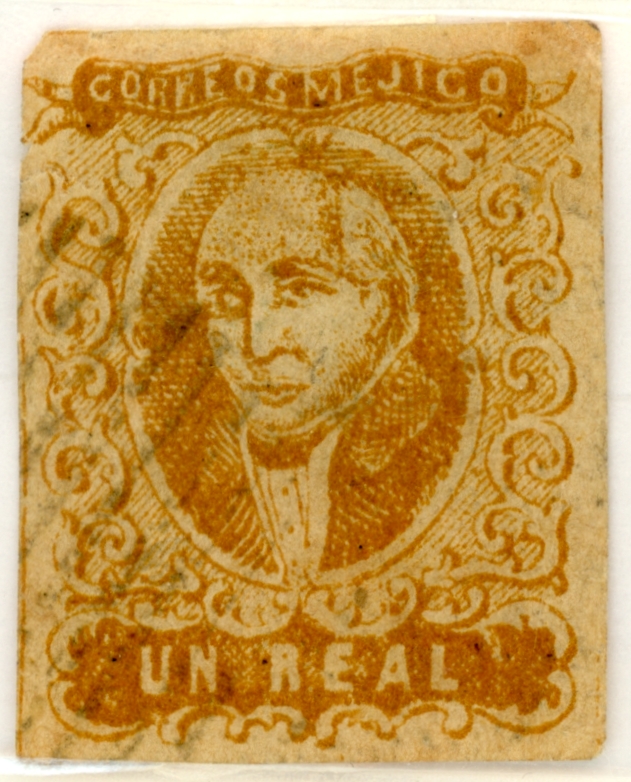
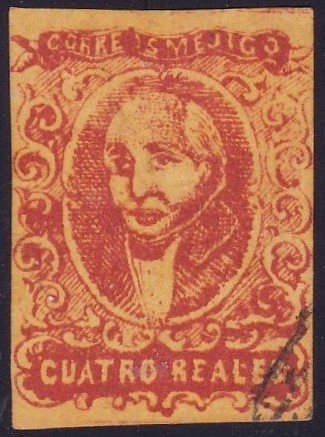
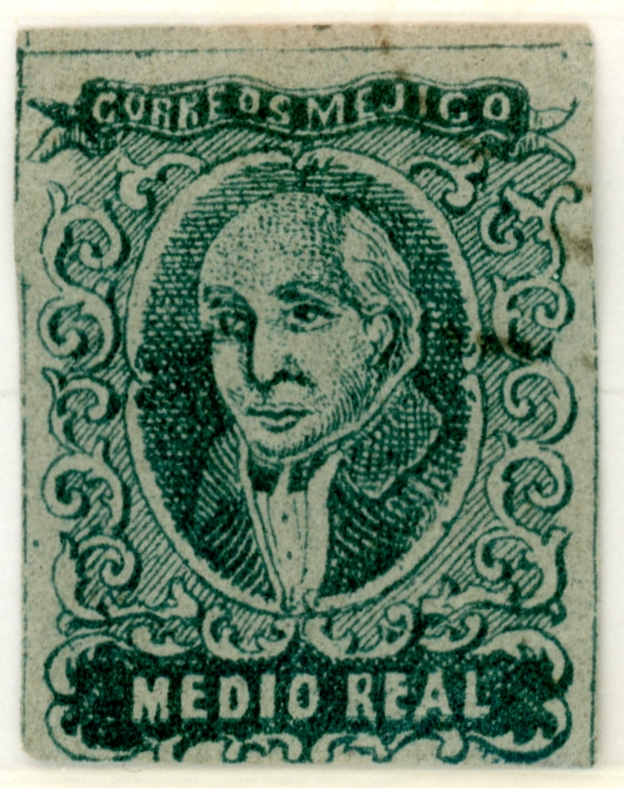
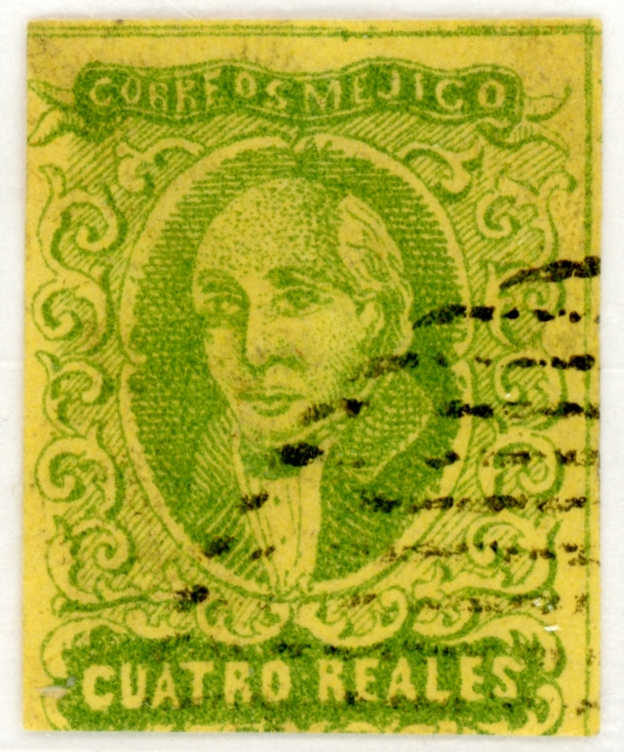
Type V comes in all values and colors of the 1856 and 1861 issue as well as the 1867 dos reales green on grey paper. They don't have overprints but a variety of grid and mute cancels.
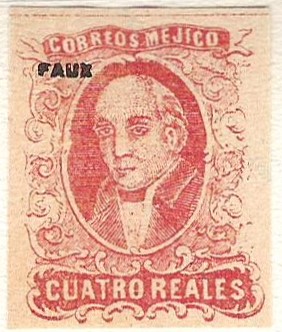
Stuart Type VIII
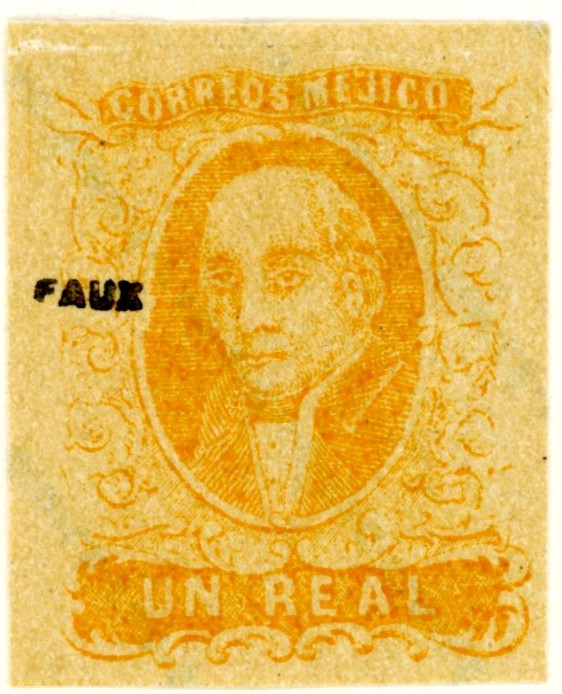
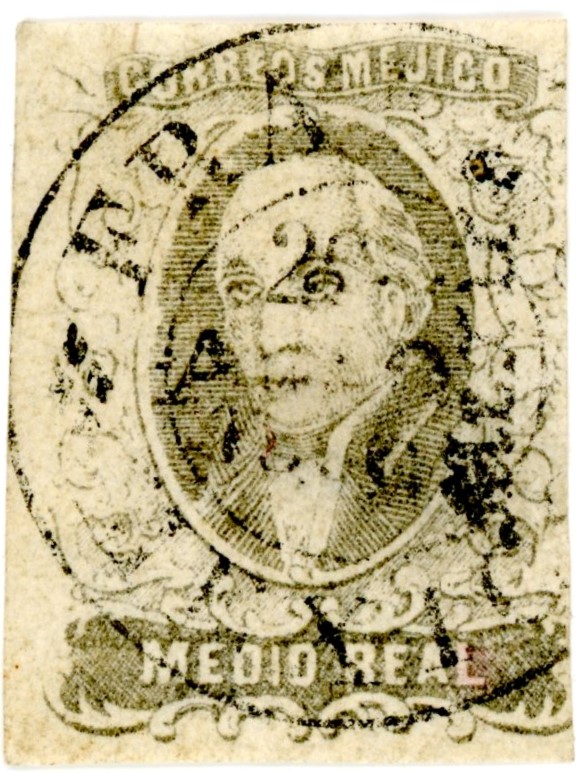
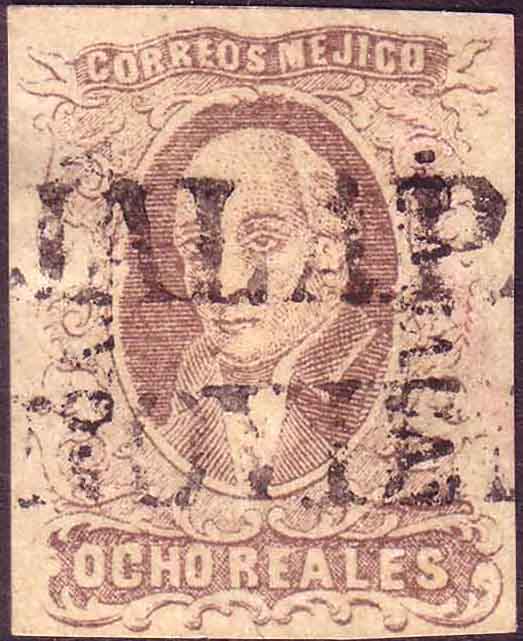
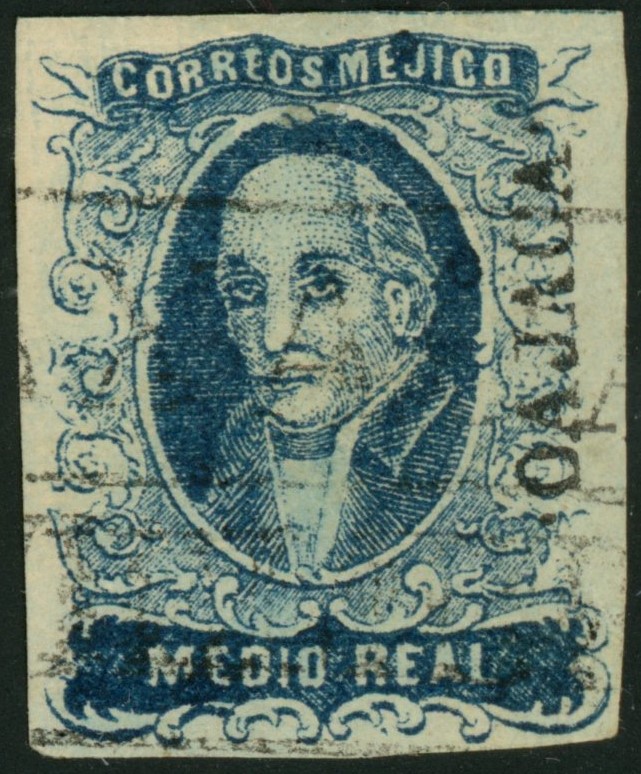
Type VIII can appear unused and also have a variety of cancels and overprints. It is relatively well done and at first glance could be mistaken for genuine stamps. The eyes have too much white below the pupils. Made by Fournier, some have FAUX on the front.
Stuart Type IX
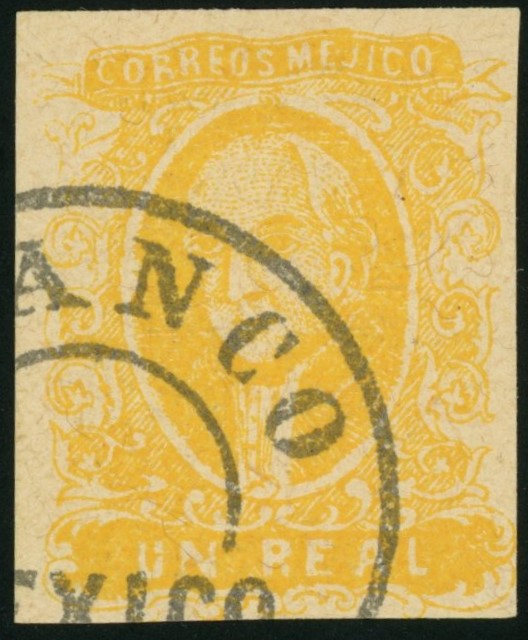
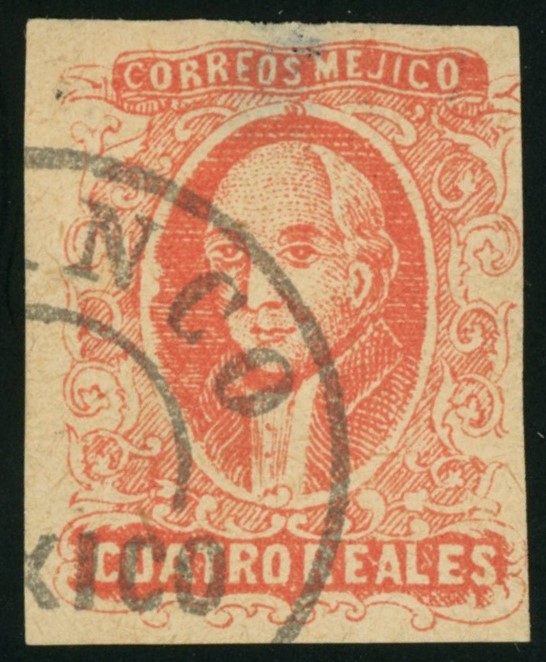
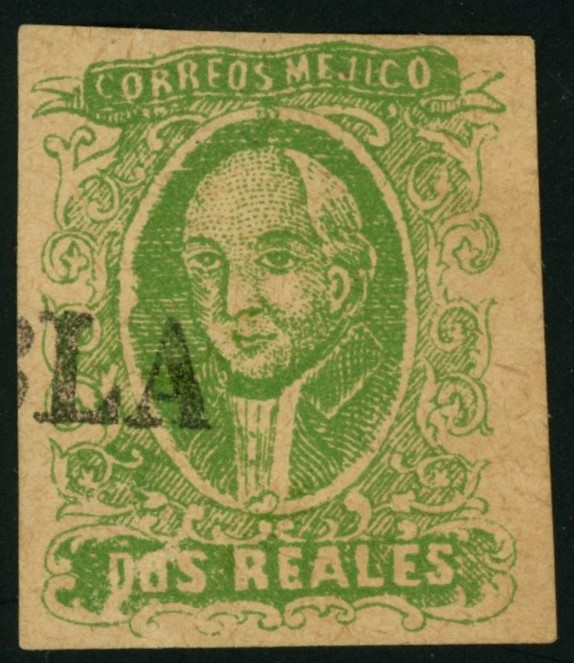
The cancels were part of the printing of Type IX which were printed in five different settings, one of which had a stamp without a cancel. Consequently, there are a few known without cancels.
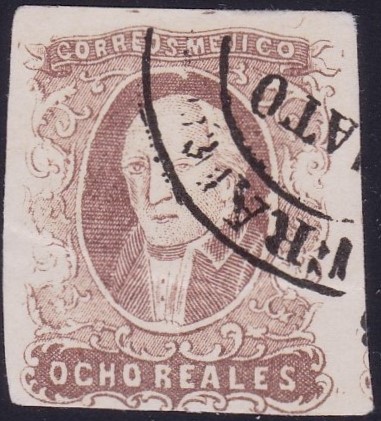
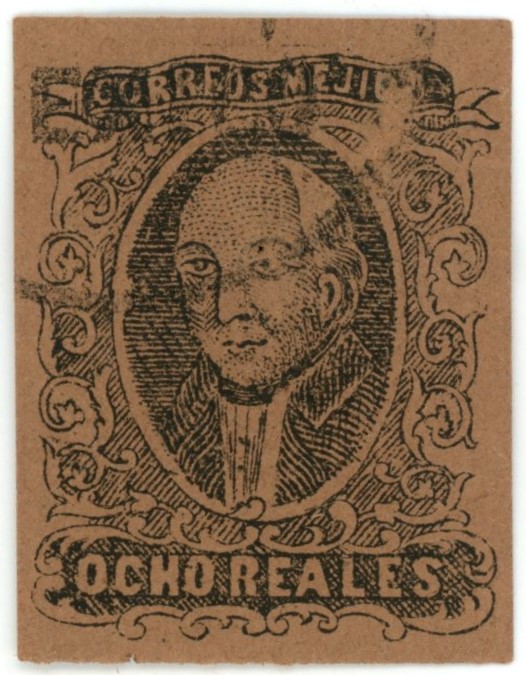
Stuart Type VII
Special attention must be given to Stuart Type VII. It is the most dangerous counterfeit and is often sold as a genuine stamp. It is the only counterfeit that was engraved and is only found in the ocho reales value. The 1856 version is dull violet to light brown. The 1861 version comes in both colors, black on brown and green on brown. Most do have not overprints or cancels, although a Mexico, Guadalajara and Gothic Mexico overprint are known. The Gothic overprint is very different from a genuine overprint. Although meant to emulate the 1856 and 1861 ocho reales stamps the color of the ink and paper vary from copy to copy. Cancels are known which may have been applied long after they were printed.
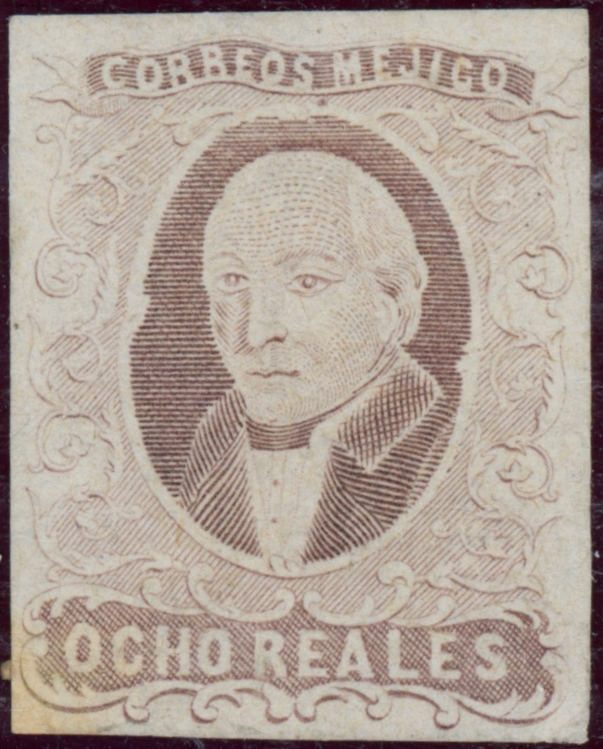
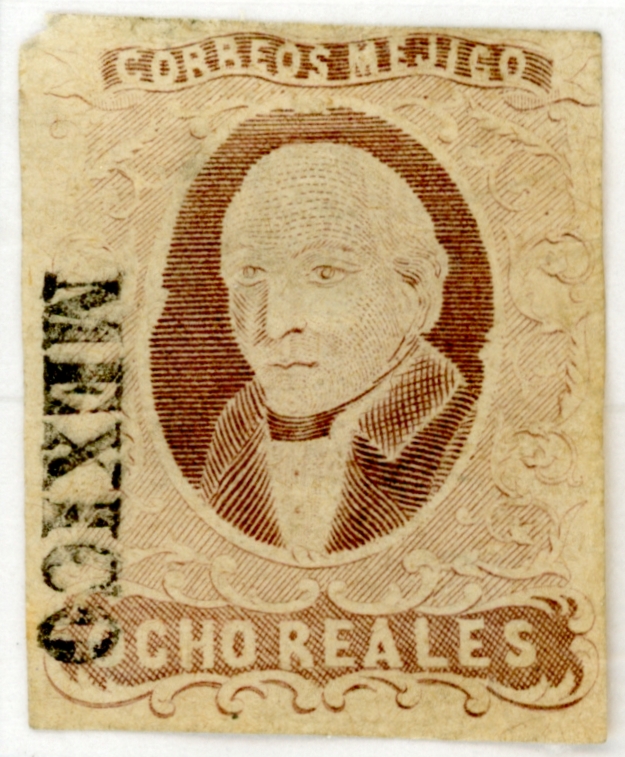
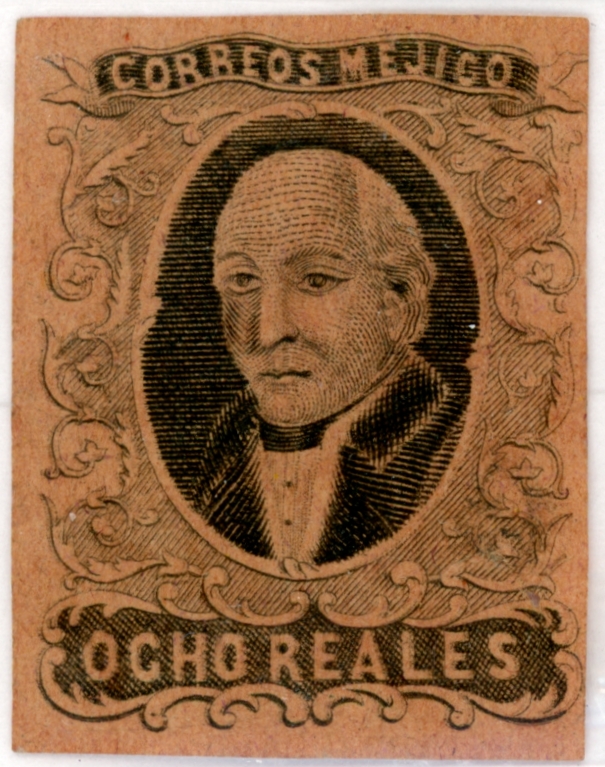
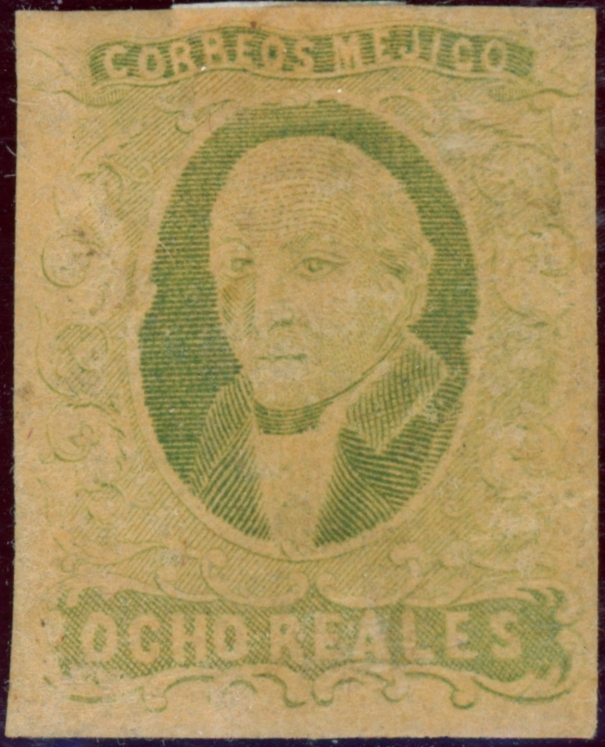
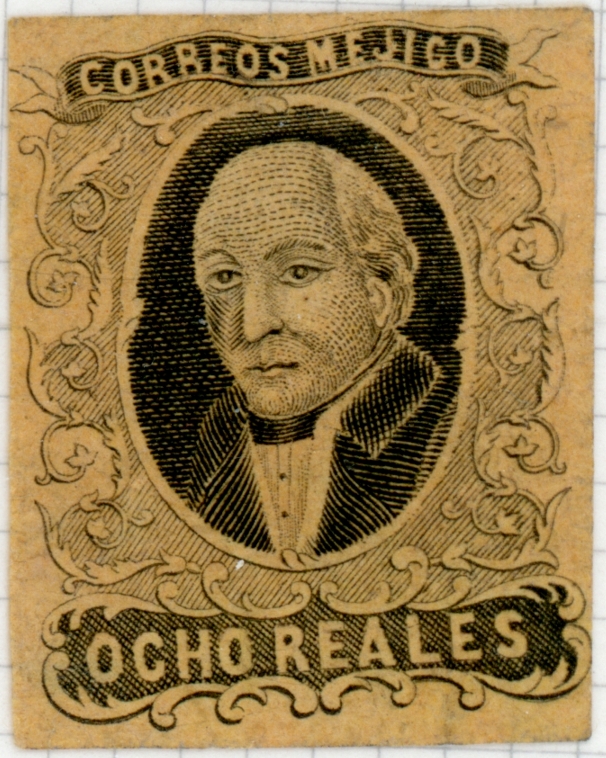
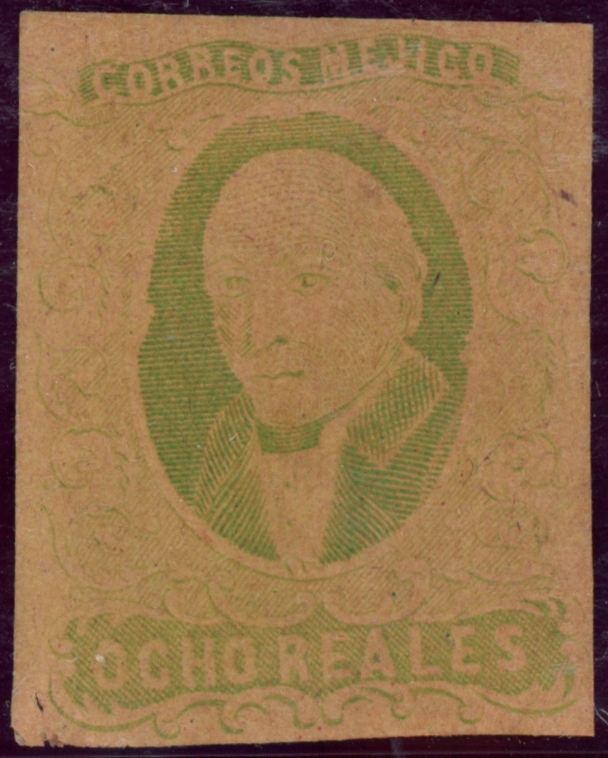
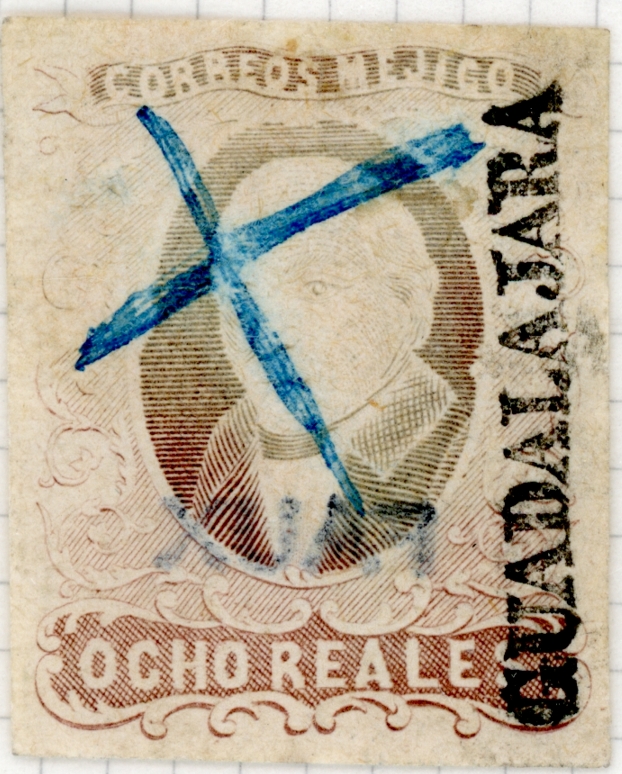
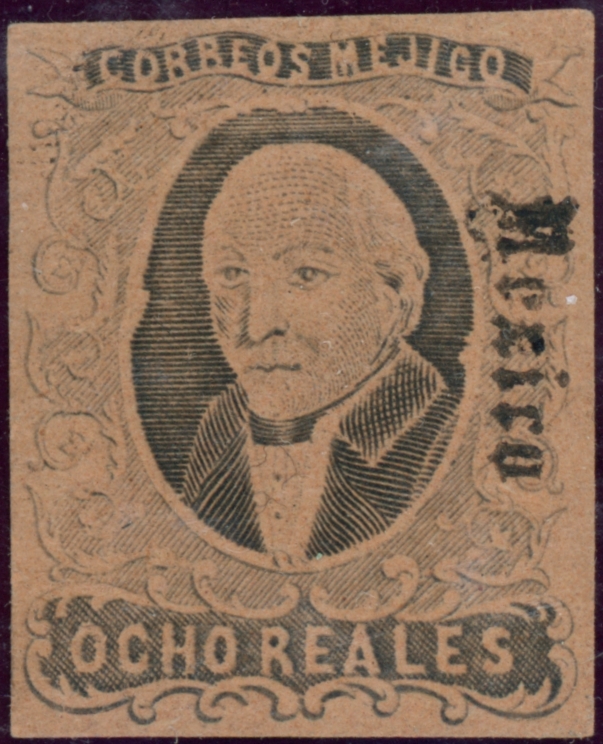
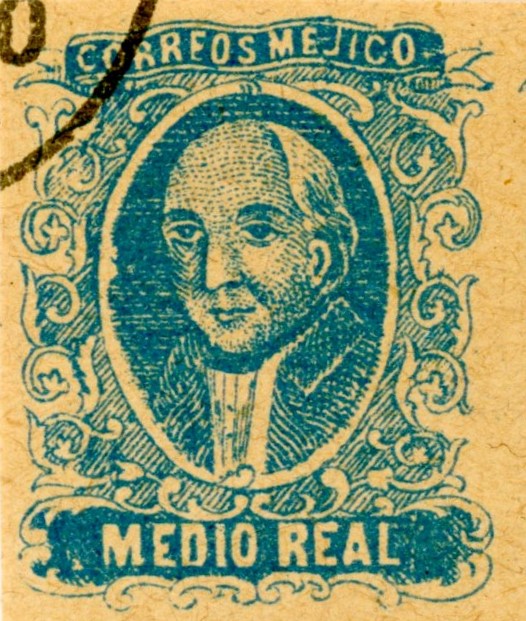
Comparison of the Counterfeit to the Genuine
On the left is the counterfeit, on the right is a genuine stamp. Some subtle differences can be seen. Hidalgo’s mouth appears to be frowning in the counterfeit, in the genuine it is straight and a little longer. The cross hatching in the labels is stronger in the genuine.
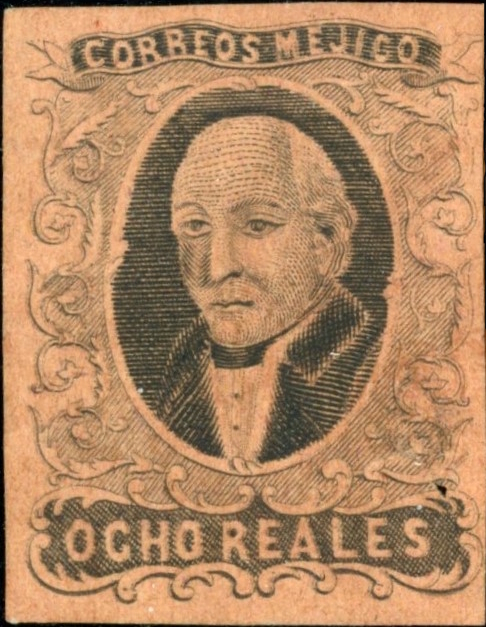
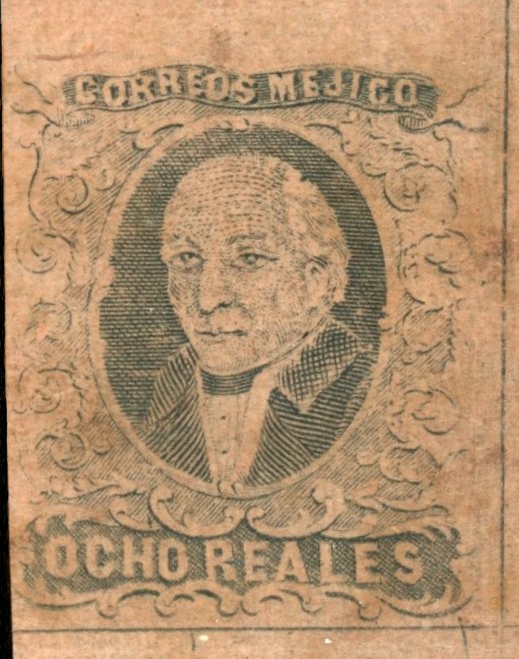
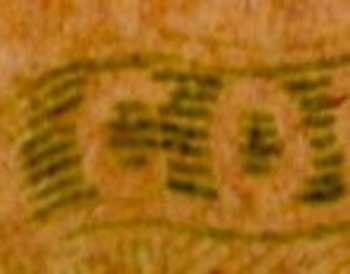
Another difference is in the C of CORREOS in the top banner. In the counterfeit, the C is rounded, in the genuine it is elongated.
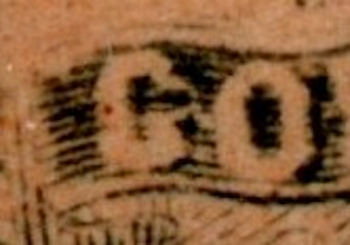
Any old-time collection will have examples of these counterfeits and they can be of interest to those that collect forgeries. I hope having color pictures will help in identifications even though they usually would not be mistaken for genuine stamps. The only other counterfeit that is dangerous is the one made by Sperati which is a photographic copy of a genuine stamp. Fortunately, it is rare and not a problem for most collectors.

 Facebook