 EN
EN
 ES
ES

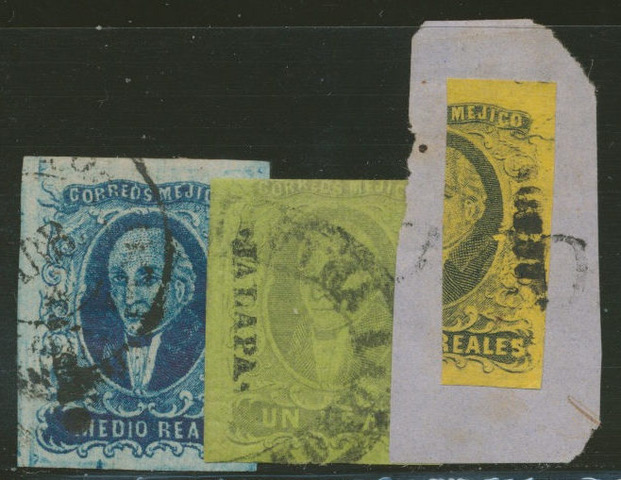
The Art of Collecting Mexico
By the time I had started to collect Mexican stamps and postal history, I had already been a collector of other countries for many years. My own connection to the art world may have influenced my love of Mexican stamps. Having parents that decided to retire in Mexico in the early 1980s and my own travels there surely may have had something to do with my decision to collect Mexico. As I sit here writing this, I also think about how interesting I found Mexico’s stamp history — and particularly the unique system of district overprints on the early stamps.
I will start this piece with the first things that tend to spark the collector’s interest in collecting Mexico. Later sections will deal with a wide range of topics for the new collector of Mexico, such the philatelic periods of Mexico, areas of possible focus, where to buy Mexico material, how much to pay, issues related to condition, the importance of learning as much as you can about your area of focus, and where to find useful reference material.
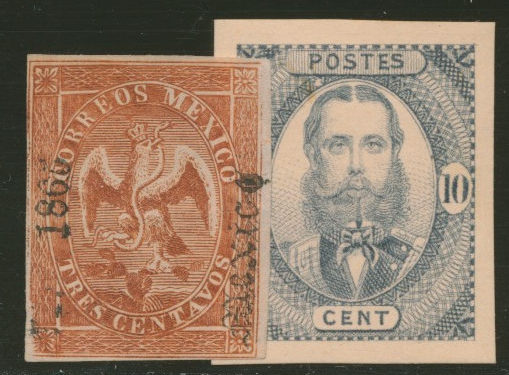
Interestingly, most of the early classics pale when compared with some of the other countries of the world. On the other hand beauty is in the eyes of the beholder. My good friend, Doug Stout, took some offense when I made a remark that the 1868 stamps were second only to the ugliness of the 1872 issues. Before Doug passed away, he had assembled one of the greatest collections of the 1868 issues that has ever been formed. He loved those Full Face Hidalgos just as much as an art patron would appreciate a Rembrandt.
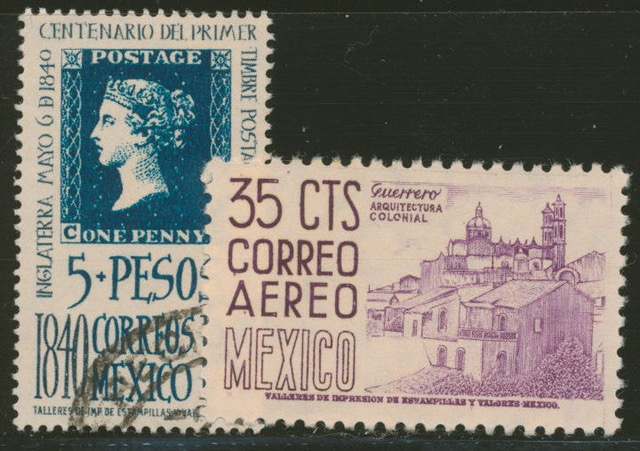
Challenge is the defining motivation for many collectors, and what other country presents such a challenge as Mexico? When the Elmhurst Philatelic Society, in Elmhurst, Illinois, decided to have all members study and collect a common country, they settled on Mexico after a little trial and error. The reason that most of them gave for accepting this country was the challenge and the opportunity to spread this activity over many years. Due to the engagement of Mexico with the collectors of this small club and the expanding interest of others to join the club, it grew into what has become Mexico-Elmhurst Philatelic Society International (MEPSI), the largest one-country stamp society in the United States. I personally know collectors that have spent most of their life collecting Mexico and never regretted it. There always seems to be something else to find and something else to learn about these stamps we love.
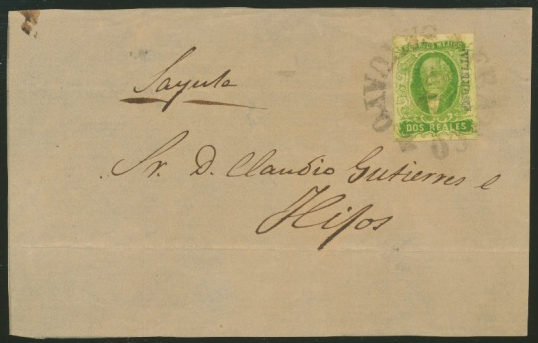
Philatelic Periods of Mexico
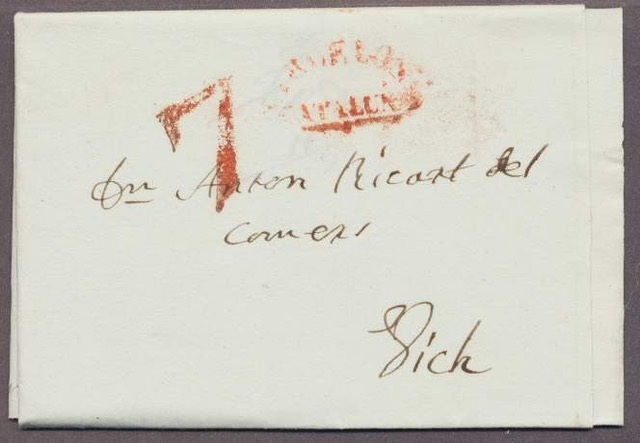
Mexican stamps and postal history can be divided into six basic periods of study. They are Stampless Mail, Classic, Post-Classic, Revolutionary, Early-Modern and Modern. I will provide a brief overview of each period, as any of them could be an area of future study that may enrich your Mexico collecting efforts.
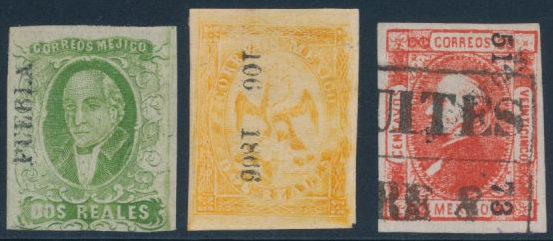
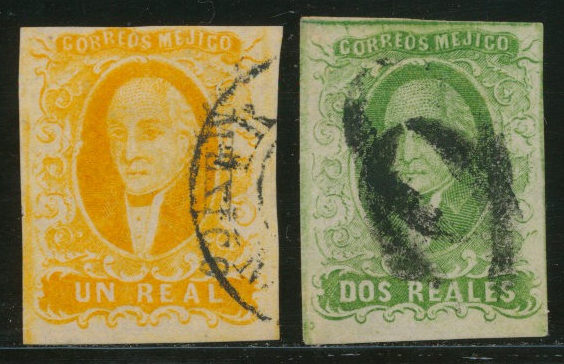
Classic Period: In early 1856, the postal administrators of Mexico devised a plan that would set Mexico’s stamps apart as almost unique in the world. No other country in the world would have what is called the district system of overprints for every area of the country. The goal was to prevent what had become a national problem in Mexico: the robbery of the stagecoach lines which were the main link between the larger cities. To send valuable stamps that could be stolen and resold would cost the postal authorities a huge sum, diluting their revenue and necessitating continual rate increases. Someone — unknown today — came up with the idea of overprinting the stamps upon arrival at their designated district office that would validate the stamps for postal use. For the collector, this means that each stamp issue would turn into a possible average of 50 stamps for each denomination. The district overprinting of stamps would last until around 1883, marking the end of the Classic period. The Classic period’s legacy was an enormous amount of collectable varieties for the country. Adding to the numerous district overprints are consignment numbers and the cancels used on many of these stamps. The small number of series Mexico issued from 1856 to 1883 generated enough collectable stamps for stamp enthusiasts to spend a lifetime collecting.
The last of the Classic stamps issued were the 1874 issues and the Foreign Mail issues, which were designed by foreign stamp designers. They marked a transition to more attractive designs and higher quality stamp production.
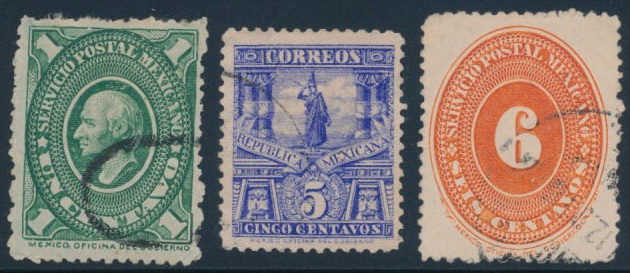
The first of the Post-Classic issues, the Medallions of 1884, actually had some stamps with district overprints, but those were done by postmasters not following the postal administration’s new guidelines. During the Post-Classic period we can find many issues that have changes in paper and perforations. The introduction of watermarks came with the Large Numerals issue of 1891, which helped make the stamp more secure from fakes. Beginning with the definitives of 1899, stamps would again be designed and even printed in England, until the last issue of the post-classic stamps in 1910, the Independence Issue.
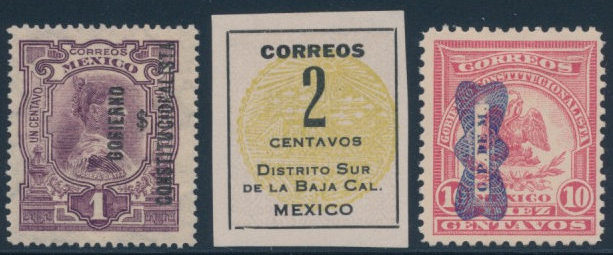
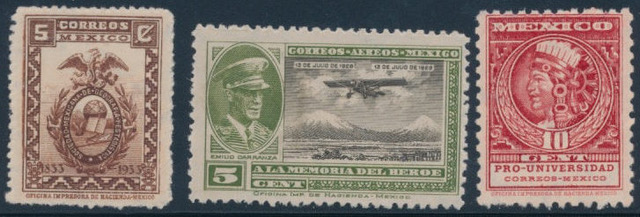
We are now able to see how the progression of Mexico’s philately through these different periods has so much to offer both the general collector wanting just one each of the stamps of Mexico and the advanced collector looking for meaningful study material. There are other parts to these different periods of study that can be added to each of these periods, from postal history, postal stationery, proofs and essays, specimens, airmail issues, back of the book issues, revenues and other subjects that play an integral part in the philately of Mexico.
Decisions, Decisions, Decisions
When we decide to begin a collection of Mexico, there seem so many directions to take. Of course, the collector may just be adding stamps to their Mexico section of Latin American stamps. There are also “general” collectors filling in all the blanks in their albums. Most collectors start their Mexico collections after they have collected other countries for years. Collecting Mexico may just be a side venture while they slowly fill in the last remaining and more costly examples in their primary collection. Some collectors shy away from the stamps and only collect something like postal stationery or covers. Then there are the collectors that are only interested in one issue or one type of stamp, like Airmails or Officials. Each collector can — and should — follow their own path.
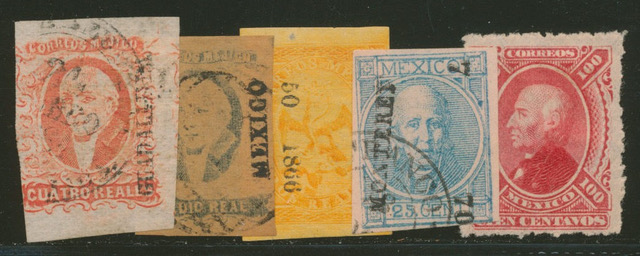
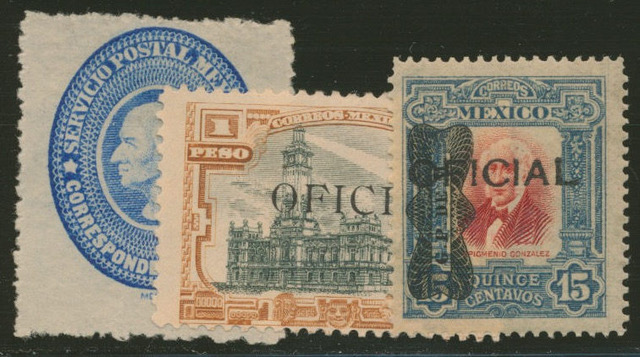
Where do I start?
Collectors new to Mexico often quickly learn that acquiring good genuine examples is easier said than done. Where are all these stamps that you want to add to your collection? To illustrate the process of finding material, I will tell my own story of making Mexico the focus of my stamp collection.
I started collecting Mexico before I had internet. eBay, Nick Follansbee’s great catalog, and joining MEPSI were all still in the future. The few stamp stores near me lacked anything but the most common Mexican stamps — and rarely had more than a handful. At the local stamp show I found a few dealers that had Mexican stamps, but often the early issues were not available and many of the stamps were priced at full catalog regardless of condition. Things improved significantly when I went to one of the large stamps shows here in Southern California. I met Ray "Doc" Ameen, who had a large inventory of Mexican material. I also met some members of MEPSI. That prompted me to join the society, where I found more reference material and help about what I was starting to collect.
At this point, I started to sell stamps on eBay in order to finance the stamps I wanted to buy on eBay and at the occasional stamp show Doc would attend. As a member of MEPSI, I gained access to their auctions and circuit books. Over the years I started to send in bids to main line auctions that had Mexican material, but I was too often disappointed in finding out the lots were sold out at just above my bid — or worse – the stamps I won failed to meet my expectations when I received them. I now only go to auctions in person to view lots before I bid on the floor or later at home over the internet.
My story of the ups and downs of collecting Mexico points to several things I have learned over these past 30 years that may be helpful to you.
- Know what you want. Buying anything can be difficult if you do not keep your focus on what really interests you. Unless something comes up that really looks interesting and you feel it will fit into your collection, it is best to stick with your plan.
- Use all the options available to you. Whether it is an auction, circuit book, stamp show, mail order dealers, or eBay, all these sources should be considered.
- Know the seller(s) that you can trust. Sellers that are dealing with Mexico should be members of MEPSI, which has requirements for ethical dealings with clients. APS and the ASDA have ethic standards for sellers as well, but you are more likely to have a seller that knows what they are selling in Mexican material if they are a member of MEPSI.
- Learn as much as you can about what you are buying. This alone will help you find stamps or postal history that may look common to the average collector or seller but be far more scarce than the people realize. I have bought stamps from other collectors and dealers that have turned out to be extremely scarce, because my studies lead me to seeing them for what they are, not what others see as common.
- Do not get suckered into buying something that seems just too good to pass up. If something looks like it is too good to be true, it likely is not true. This is where fakes attract the unsuspecting buyers. There are some really great looking early classics that have rare postal district overprints that are bogus, which when offered from time to time as genuine at very low prices will lead the unsuspecting collector to buy these bogus items. These are filling the albums of collectors who never learned the easy methods of separating the good from the bad. (I will address self-education later in this article.)
The journey you take to make your collection the best it can be will be filled with special finds and sometimes disappointments, but in the end, it will be a journey well traveled.
So what should I pay for Mexican Philately?
Learning where to find Mexican material is only part of the equation. This begs the question of how much should you pay. Cost may depend on your budget, but condition can mean a lot of things when considering availability and cost. This may also change your ideas of how you want to form your collection and how it will evolve as you work on it.
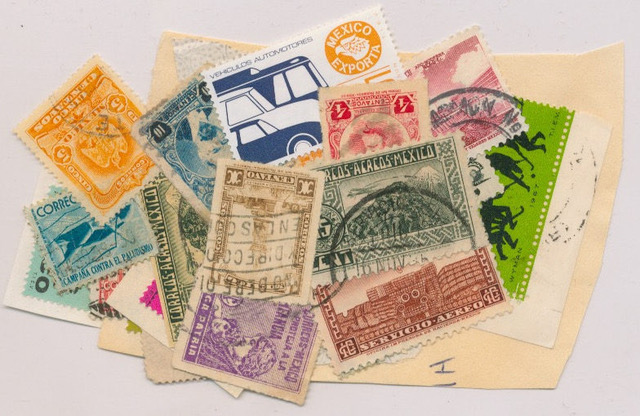
Back in the 1930s, at the height of the Great Depression, the average family had three things that entertained them at home: radio, reading, and hobbies. Evenings were often spent listening to radio shows, reading books or newspapers, and, often, pulling out stamp collections. In those days the collector could go to the local Five-and-Dime store and pick up a large bag of stamps on paper for a dime. They would then sort, soak, and place new finds into their albums. Trading the duplicates with friends became a passion of the young and old in those times. There were certainly also people that spent large amounts of money on stamps during those times (like today), purchasing some of the most desirable stamps on the market. Even the average collector would at times buy a high budget item that would be something special in their album.
It is the collectors’ willingness to spend money on stamps that has always promoted stamp collecting. The reason is obvious to some and not so much to others, but if it were not for the dealers bringing the stamps to the market there would not be any stamps for the collector to collect. We no longer have the stamp shops of the past, and stamp shows are not nearly as common as they used to be. But we do have the Internet.
On the Internet we can find thousands upon thousands of lots each week on sites like eBay, HipStamp, Stamp Auction Network and others. Obviously, eBay is the thousand pound gorilla for internet stamp sales, but a seeker of stamps can certainly find many more online sources. It is sometimes disheartening to wade through so many lots in search of what you are looking for. It is the times when you find something special at a fair price that makes the hunt especially satisfying.
This all brings us to the question of how much should you pay for the things you do find. Remember that the dealer sets their price, not some catalog. It depends on the seller’s business plan — or lack of plan. I know dealers that price their lots at such huge prices that one may wonder if they ever sell anything. (They do, but the buyers are normally looking for something very specialized or they are naive in thinking they are getting a good deal.) There are other sellers that are just trying to move stamps and will start everything at low prices, like 99 cents, to attract buyers. Often those sellers are actually making their profit on material they paid little to nothing for and charge a high fee for postage. Other dealers will ask some percentage of catalogue regardless of condition, authenticity, or rarity. Then you have some dealers that will start their lots out at a reasonable amount that will ensure them a working profit, overhead cost and original cost of the goods based on condition and rarity.
The following are some of my tips on what price to pay for different eras of the stamps and Postal History or Stationery.
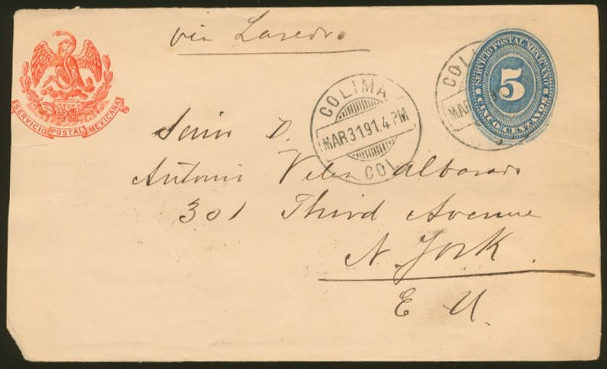
Stampless Period: Pre-Stamp and Sello Negro covers are the prelude to stamps and they fall into Colonial, Independence Pre-Stamp and Sello Negro (black mark) cover 1856 forward. Colonial material tends to be very expensive, is often in terrible condition, and is rarely complete. The pre-stamp covers are more valuable for the cancelation, and the Sello Negro are valued by the district. These covers can be found for a few dollars to hundreds of dollars. No collector should be buying these unless they have acquired some knowledge of these subjects.
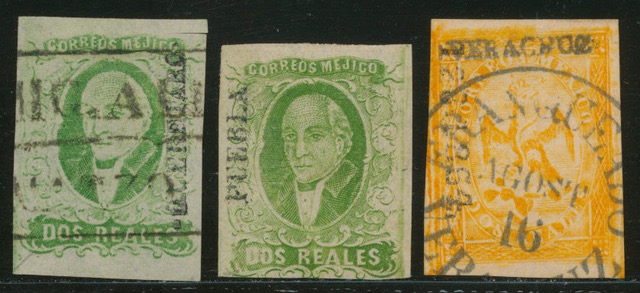
Condition makes a lot of difference in price of common issues, districts and consignments, but unlike many stamps of the world where a faulty stamp may only bring 5% of catalogue value, in Mexico the price for a faulty common stamp, depending on how faulty it is, will cost anywhere from 10% to 30% of catalogue value. Sound, very fine common stamps can exceed catalogue values. Scarcity can elevate the price for even faulty stamps, and better condition examples depend on the collector’s priorities and willingness to pay a premium. The rule of thumb for nice on-cover common classics is about 10x catalog of the singles. Values increase significantly for better examples.
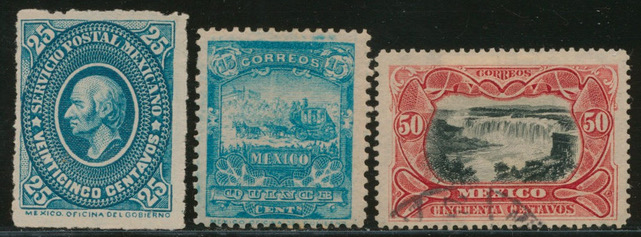
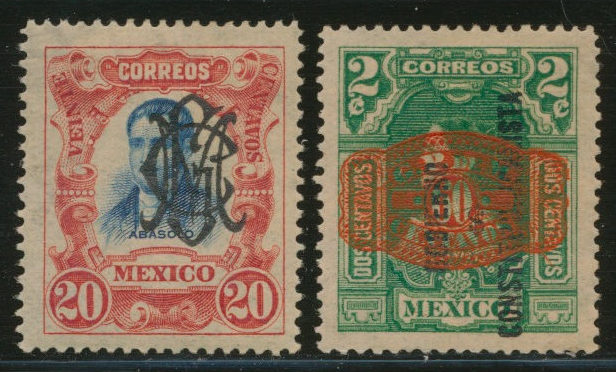
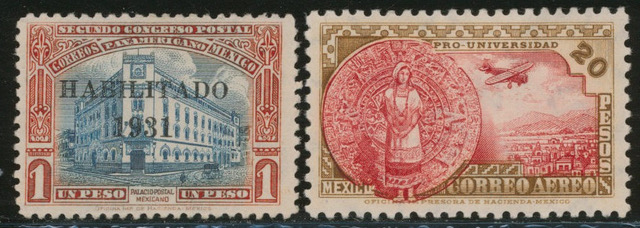
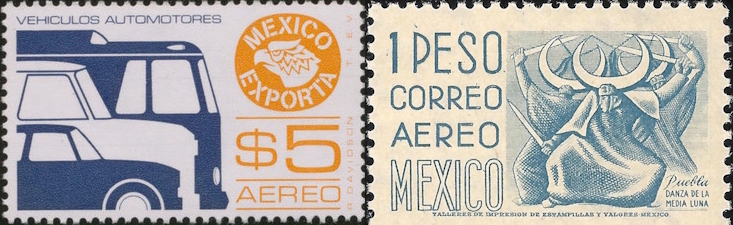
Enjoy collecting, learn about your stamps and remember that very few of these stamps are unique. If you pass up something that seems too high-priced, you will likely find the item at another time for less. Just knowing about what you are buying will help you determine what you should pay.
What Condition Should I Accept In Mexican Material?
We now move to the question of conditions acceptable for philatelic material from Mexico. This is a very interesting and important part of collecting for all – novices and advanced collectors alike. One of the things that makes collecting Mexico really unique is the huge volume of stamp varieties that are collectable in the Classic period due to the district overprinting and wide variety of interesting cancels from large to small communities. While there is a large number of varieties, some of them are extremely difficult to find.
This reminds me of a story about two friends. The old friends were meeting for the first time in a long while. When they met, the first friend was introduced to his old friend’s new wife. He was horrified that the woman was the ugliest he could ever remember seeing. Later when he took his friend aside, he asked him as gently as he could, “I do not mean to be harsh, but your wife is not as attractive as I expected.” Well, his friend looked at him and said, “Yes, I know she is not as beautiful as some women but I love her anyway.” Sometimes, a stamp may not be beautiful, but the collector may love it all the same.
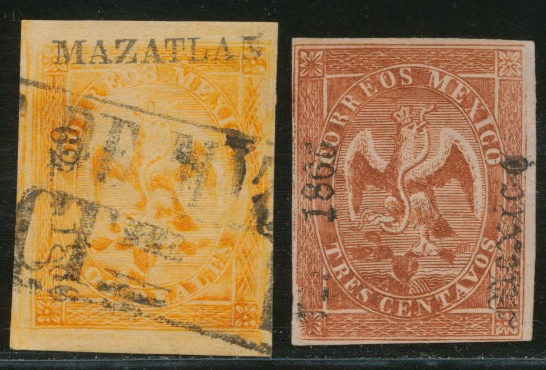
The second element of condition is the physical qualities of the material you wish to collect. I know collectors who will not even accept a stamp with a minor corner crease or a missing perforation tooth. Horrors that the stamp may have a light hinge thin or a dealers mark on the back. The bottom line for collecting Mexico is that very few stamps can be found with the high physical qualities of many of the other countries of the world, because mintages for Mexico are much lower when coupled with countless varieties for any one issue in the classics.
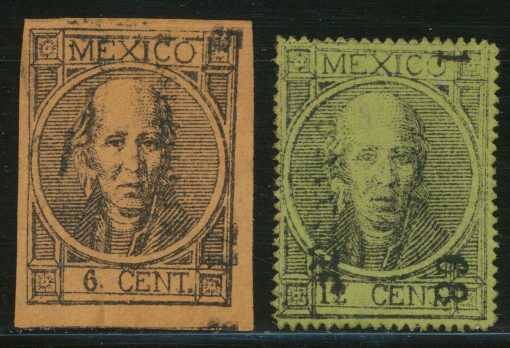
How will condition affect my material’s value when I get ready to sell? This is a question every collector will ask when reflecting on the future when their collection will be sold. First, one must consider how much you are paying for the material you buy. Do you pay as much for a faulty stamp as you would for one that is totally sound? No, of course you would not. Are you expecting your common perfect stamps to sell for more because they are perfect? Think again, because common stamps will not be prized just because they are nice, and you will likely never see them in main line auctions due to the low values. Nice rare stamps, yes, they will bring high dollars in an auction and will also increase the value of what a dealer may pay. Be realistic, and realize that very few stamps wind up being showcased at auction houses. Most auction houses will only list a single item for around $100 start. Stamps under that value will be grouped together into collection lots and the prices fall to a low fraction of catalogue value.
Of all the things I say about condition, one thing runs true, and that is the fact that you, the collector, are the one who determines what your collection is and how you want it to be. So, look for what pleases you and be realistic in what you can find and afford. Lastly, try to have fun hunting for those special items that make your collection interesting and satisfying.
How do I find out more about Mexican stamps?
Many collectors use the Scott Catalog for their basic number reference, while others use Stanley Gibbons, Michel, or other catalogs that list stamps of the world. Numerous catalogs of Mexican stamps have been produced over the years, including some from Mexico, such as Celis Cano and Vackimes. Few had in-depth information on the Classics through the Modern except for Celis Cano’s Sellos Postales de Mexico (last published in 1982 in Spanish). This last reference catalogue is no longer available as far as I know, but, so much has been learned over the years that an old copy is of little use for values and other things that have been updated.
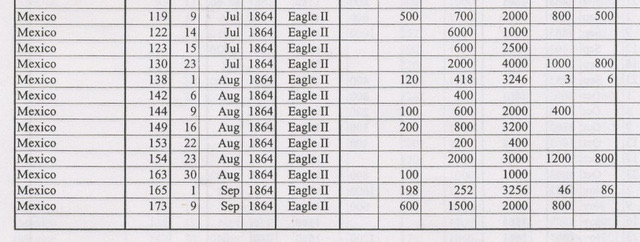
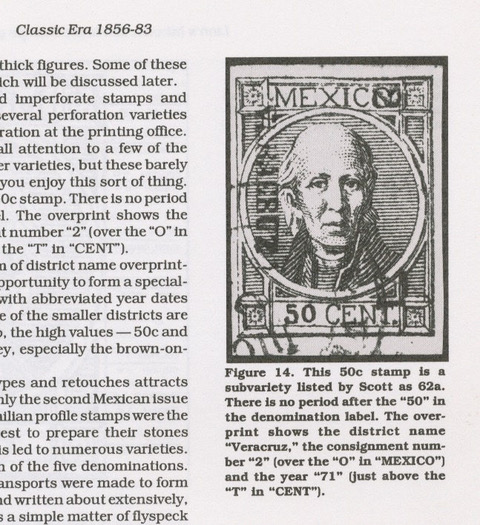
I have already pointed out a few references that you are likely to find useful, but there are many others that are very helpful to the general collector or for those that want to go into greater depth. Some examples include:
MEPSI was also able to copy a large percentage of the Postal Archive data a number of years ago, first in photocopies, and later Tad Mackie was able to take the photocopies and turn them into digital form. These are available for research of both districts and sub offices. Not totally complete, but they have a great deal of information for a true student of the classic Mexican stamps.
If you join MEPSI, you will be able to access the full online archive of our journal, Mexicana, dating back to 1952. Comprised of more than 300 issues, the archive covers over a thousand articles that pertain to collecting Mexican issues, history, technical knowledge, new findings and more. Mexicana has won Gold and Vermeil Medals in Philatelic literature competitions. Access to Mexicana is one of the significant benefits of joining. The Society also has helped writers turn their research efforts into good books, handbooks and articles that are reaching the needs of our members. For more information, explore mepsi.org, where you can submit your membership application online. As a member, you will also be able to participate in MEPSI's Circuit Sales and purchase digital versions of MEPSI publications. Dues start at $35 per year and represent some of the best money you will ever spend if you are really interested in collecting Mexico or just love the topics.

 Facebook